Grieving From Abroad — How Diaspora Families Stay Connected to Ghana Funerals in Real Time

These are two of the hardest experiences a Ghanaian diaspora person can go through, and they are happening every week in cities across the world. The grief is one thing. The distance multiplies it.
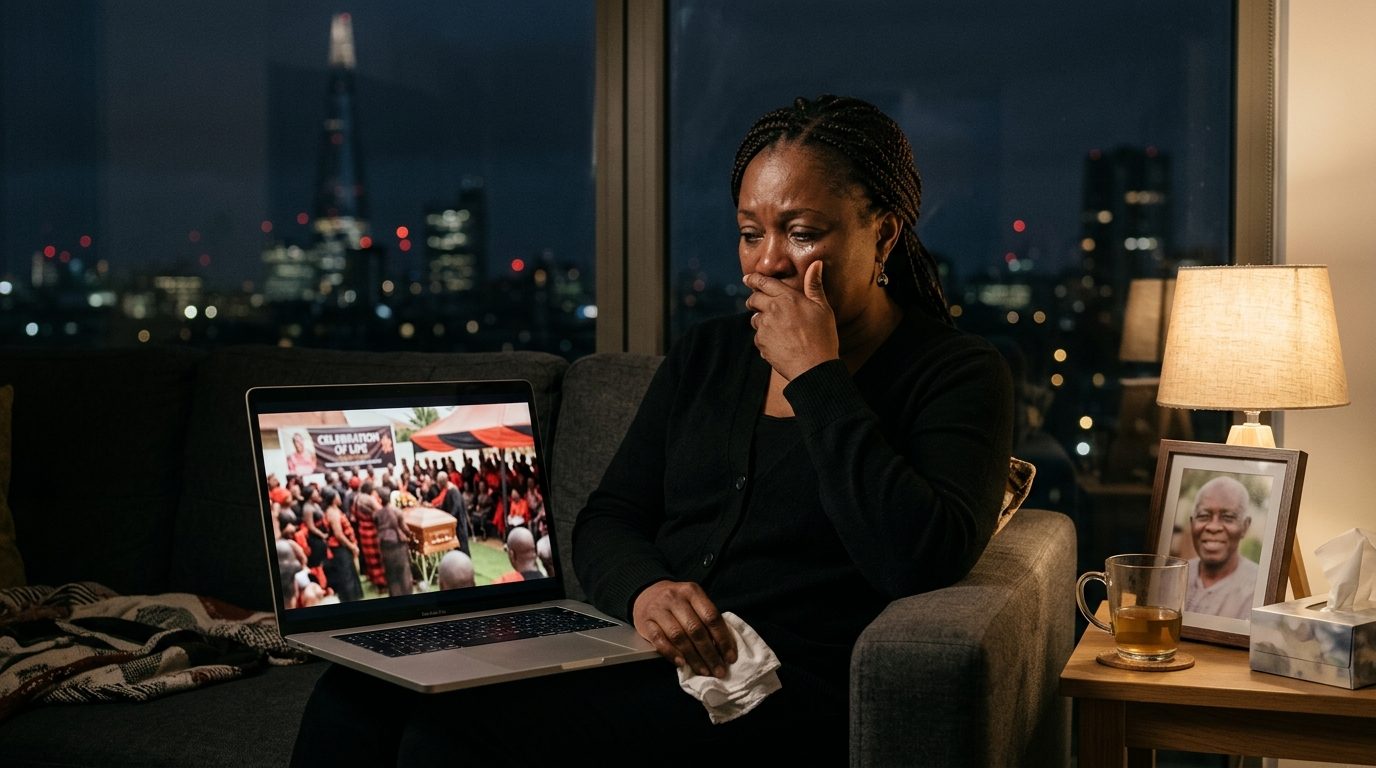
A woman in Toronto received the call about her mother's death at 4 a.m. her time. She was on a plane to Accra within 19 hours. She arrived three days before the one-week, and she stayed for the final funeral rites. Her cousin in Manchester could not get the same flight in time. She watched her aunt's funeral on a phone screen from a kitchen in England, alone, at 2 p.m.
These are two of the hardest experiences a Ghanaian diaspora person can go through, and they are happening every week in cities across the world. The grief is one thing. The distance multiplies it.
The good news is that Ghanaian families are getting better at making the distance smaller. Here is what works, what does not, and what every family should think about before the next funeral.
The pain that distance adds
When a Ghanaian diaspora person loses a parent, sibling, or grandparent back home, the grief is layered. There is the death itself. There is the geography. There is the cost of getting there. There is the work and family that may not let them get there at all. There is the guilt of not being present. There is the worry about how the funeral is being planned without them. There is the regret about the conversations that did not happen.
A funeral that is well organised, with strong diaspora inclusion, does not erase any of this. But it reduces a meaningful amount of it.
A funeral that is poorly organised, with the diaspora left to find out things on WhatsApp at midnight, deepens the wound. The diaspora cousin who learns the burial date from a Facebook post she stumbled on three days late carries that grievance for years afterwards. The aunty in London who is told "we will livestream it" but the stream fails at the eulogy carries that loss for the rest of her life.
These are avoidable injuries. Families who plan for them do not inflict them.
Three forms of presence
There are three different ways a diaspora family member can be present at a Ghanaian funeral. Each one matters. Few families plan for all three.
Physical presence. The diaspora member flies home. This is the form most families think of first. It is also the most expensive, most disruptive, and the form most diaspora members cannot manage for every funeral. A family that assumes diaspora members will always fly home has not understood the constraints they live under.
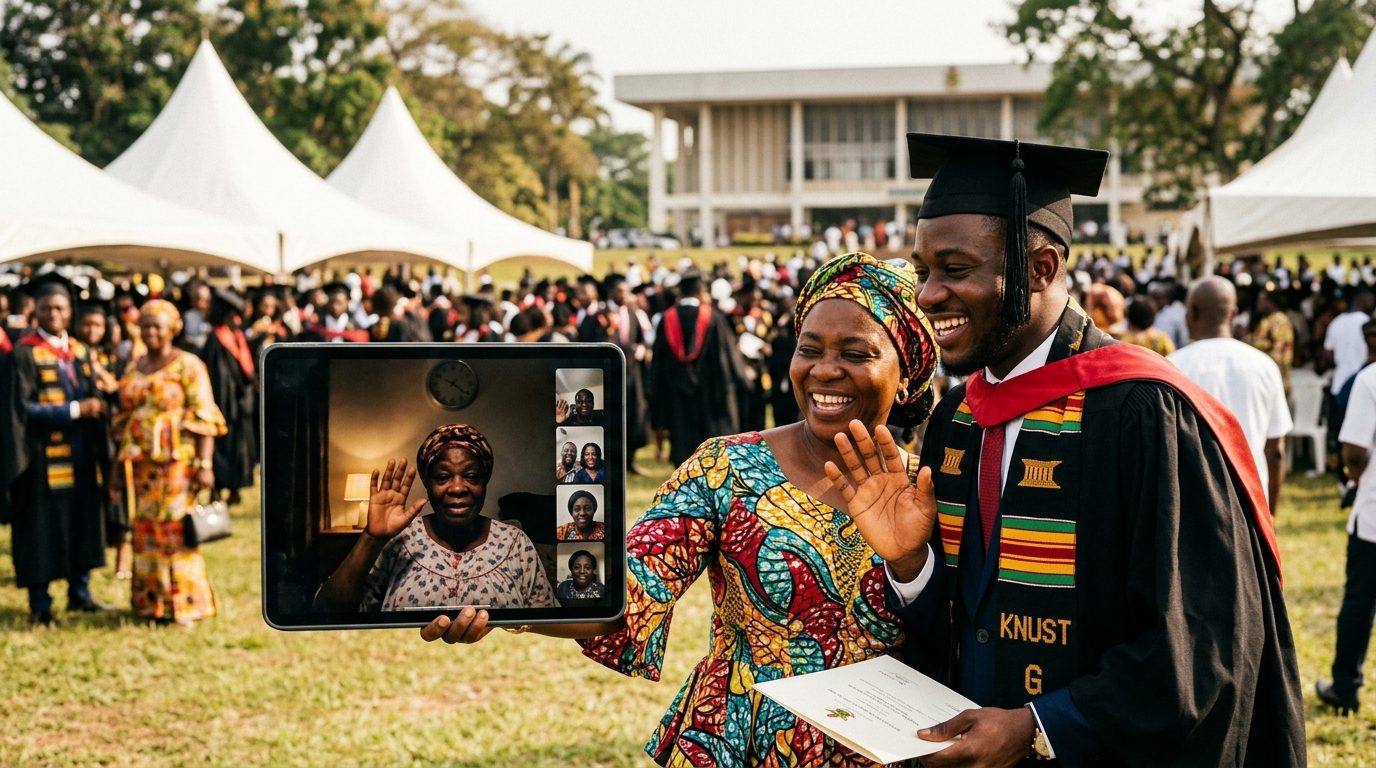
Real-time digital presence. The diaspora member watches the funeral live from wherever they are. They see the burial. They hear the eulogies. They feel they were there. This is the form most families now attempt but few execute well. A reliable livestream is the difference between presence and frustration.
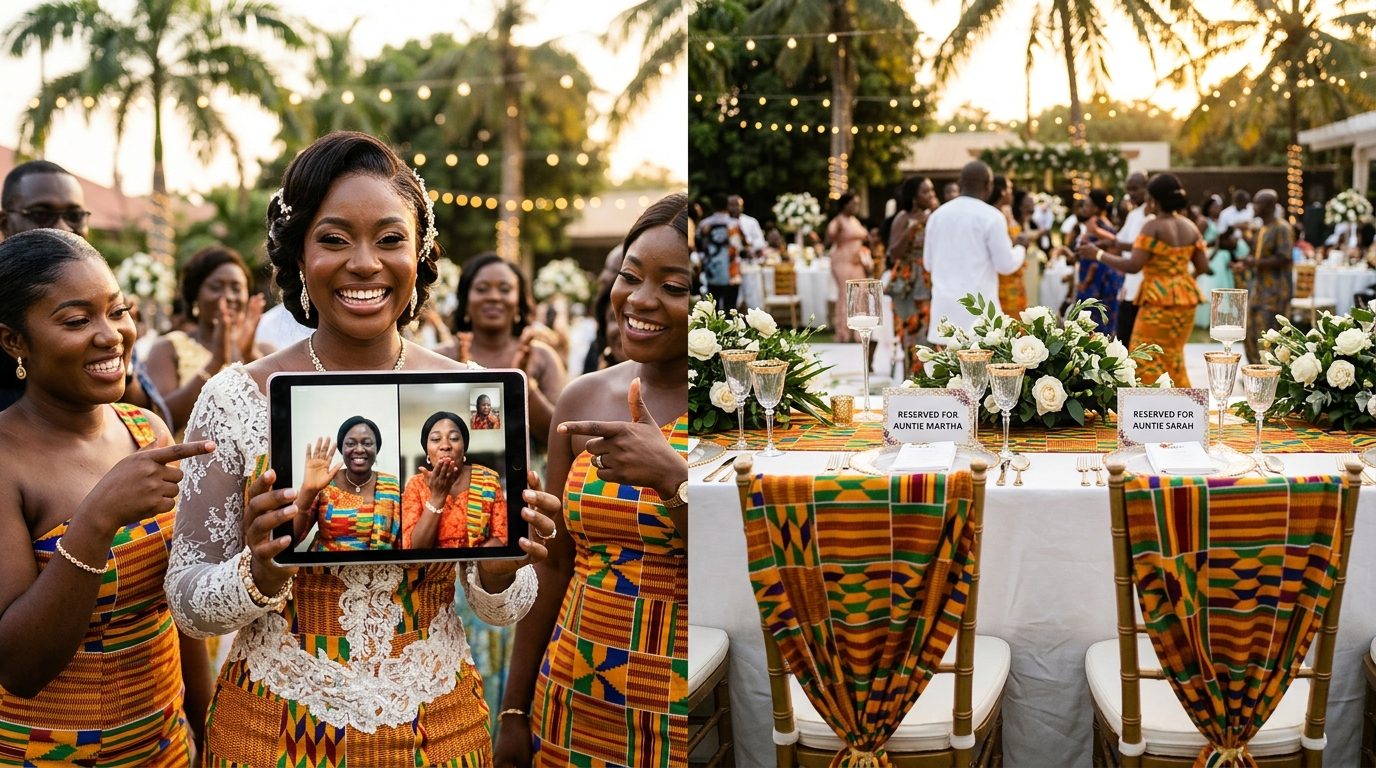
Asynchronous presence. The diaspora member is unable to watch live but contributes from afar. They send a video tribute that plays during the family reception. They write a condolence note that gets read aloud. They send a financial contribution that gets acknowledged publicly. They join the family virtually for the one-week or the 40-day. Their presence is felt even though they were not online at the moment of the funeral itself.
Good Ghanaian funerals in 2026 plan for all three forms. The family who travels comes home. The family who can watch live is given a stable stream. The family who can do neither is given a way to participate before, during, and after.
What a proper diaspora-inclusive funeral looks like
I will describe one I attended last year, because the details matter.
A respected elder died in Kumasi on a Wednesday. By Friday, the family had a memorial page online with his photograph, his obituary, the funeral schedule, and a condolence book. The page was shared in the family WhatsApp groups and with his colleagues, his church, his social networks. By the weekend, hundreds of people had viewed it. Diaspora family in the UK, Germany, the US, and Canada had begun to leave their condolences and pay their contributions.
On the morning of the funeral, a designated cousin set up two cameras at the venue. One stayed on the proceedings throughout the church service. One was free to move during the family gathering afterwards. Both streamed to a private link shared with the family.
A relative in London opened her laptop at 9 a.m. her time. She made tea. She watched the entire service. When her uncle gave the eulogy, she wept. When the choir sang her mother-in-law's favourite hymn, she sang along with them.
After the service, she opened the family WhatsApp group and saw the photographs being shared in real time. She replied. She felt part of the day.
That night she went to bed knowing she had been present. Not physically. But present in a way that mattered.
This is what the new generation of Ghanaian funerals can do for the diaspora. It does not happen by accident. It happens because a family decided, early in the planning, that the diaspora was going to be included properly.
The four pieces every diaspora-inclusive funeral needs
If you are planning a Ghanaian funeral and you have diaspora family who matter, build these four pieces into the plan.
A memorial page that goes up within 48 hours of the death. With the deceased's photograph, a properly written obituary, the funeral schedule, and a place for condolences. Share the page with everybody. The diaspora family who lives by the page get the information they need; they do not chase it.
A real livestream plan. Not a phone propped on a chair. A stable camera, with wired audio if possible, and a backup phone running a parallel stream. Assign one family member to manage it on the day. Test it twice in the days before the funeral.
A virtual condolence book or message space. So diaspora family who cannot make the trip can leave their tribute. So distant friends and former colleagues can pay their respects. So the family has a record of what people thought of the deceased that they can read in the weeks and months after.
A way to receive contributions from abroad. MoMo for those with Ghana mobile networks, but also a path for diaspora family using foreign banks. A cousin in Toronto who wants to contribute should not have to send 8 WhatsApp messages to figure out how. One link, one tap, done in 30 seconds.
The cost of doing this poorly
The Ghanaian diaspora is a large, careful, and deeply loyal community. Families who execute well are remembered. Families who execute poorly are also remembered, in a different way.
The cousin in Manchester who watched her aunt's funeral on a frozen stream did not forgive the family for that. Five years later, she still says they did not care enough to set the stream up properly.
Whether or not that is fair is beside the point. It is how she experienced the day. And her experience of the day is what she carries with her for the rest of her life.
The investment to do diaspora inclusion well is small. The cost of doing it badly is large. Families who understand this prioritise it.
What I would say to every family preparing a funeral now
Decide on day one of the planning that the diaspora is going to be included properly. Then build everything around that decision.
A memorial page goes up first. A livestream plan goes in second. A condolence and contribution route goes in third. The rest of the funeral planning happens around those three pillars.
The aunty in Birmingham who has been waiting for thirty years to see how the family would honour her brother does not need to be disappointed on the day. With a few hours of planning, she does not have to be.
Nyame nhyira no — God bless him or her. The whole family deserves to be there. Distance should not change that.
VibeLink builds dignified digital memorial pages for Ghanaian families. If your family is preparing to honour someone, we are here.
Edmund Adjekum
Founder of VibeLink Event — building beautiful digital invitations that honour the way Ghanaian families actually celebrate. From weddings in Kumasi to memorials in London, every event deserves an invitation as thoughtful as the moment.