How to Make Sure Your Diaspora Family Feels Truly Part of Your Ghana Wedding

Six months later, the bride was still trying to mend that relationship. And six months later, when she told me the story, she said one thing I have not stopped thinking about. "I did not know diaspora aunties could feel this hurt. I thought they were just relatives who lived abroad."
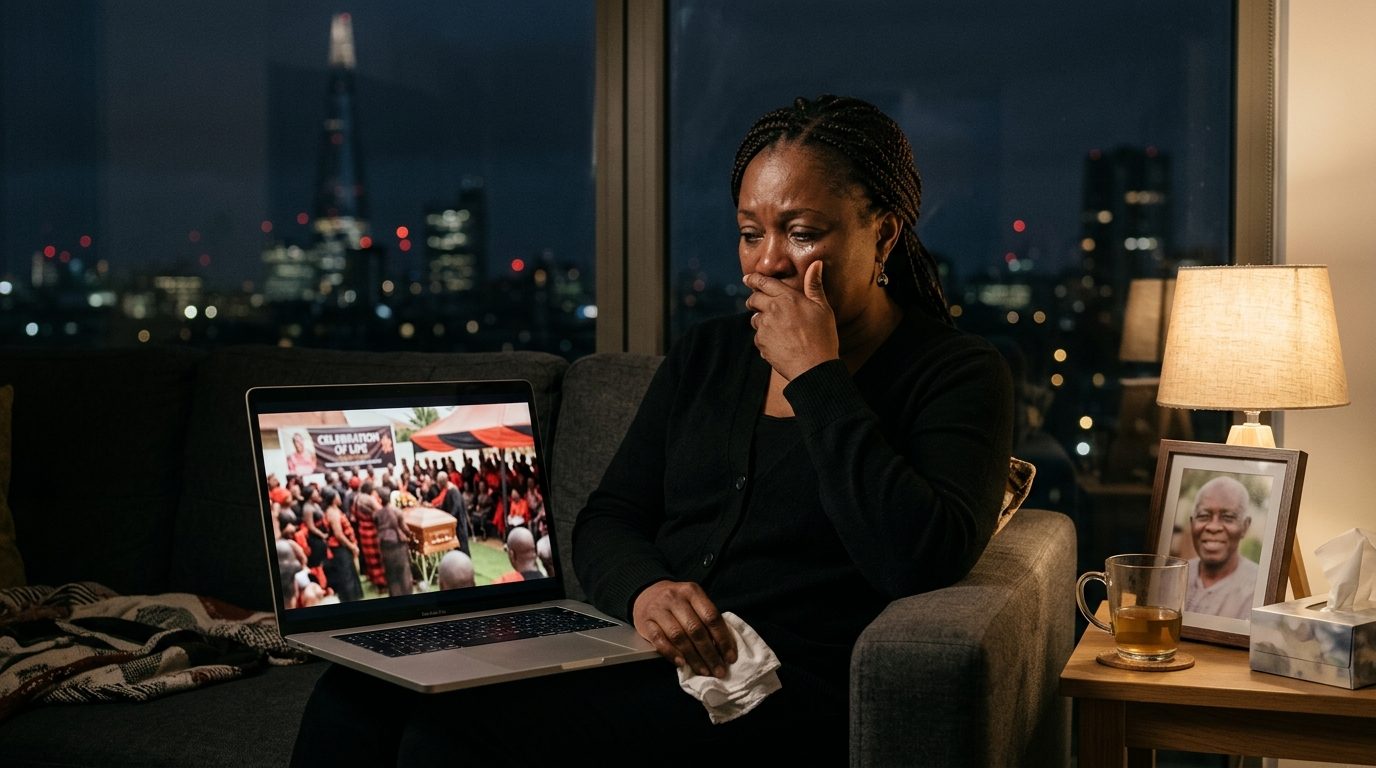
A bride in Kumasi sat across from me last year and told me, with tears in her eyes, that her aunty in Toronto had not spoken to her in six months. The aunty had funded a significant portion of the wedding. She had also been written out of the planning so completely that she felt like a sponsor rather than a relative. When the JPEG flyer eventually reached her on WhatsApp at 11 p.m. her time, four days before the wedding, she replied with a single word.
Wow.
She did not come.
Six months later, the bride was still trying to mend that relationship. And six months later, when she told me the story, she said one thing I have not stopped thinking about. "I did not know diaspora aunties could feel this hurt. I thought they were just relatives who lived abroad."
They are not. They are family who happen to live abroad. The difference matters, and the families who understand it have weddings that bring everybody closer instead of pushing somebody away.
Here is how to do it right.
Start with what they actually want
Diaspora family members do not want to be guests at a Ghanaian wedding. They want to be relatives at a Ghanaian wedding. This is not a small distinction.
A guest is invited, attends if convenient, and sends a card. A relative is consulted, included in the planning, named in the programme, present in the photographs whether their body is in the room or on a screen.
The diaspora aunty who has sent GHS 600 every quarter for three years to help with the wedding fund is not a guest. She is a co-builder of this wedding. She wants to be treated like one.
The first decision a couple makes about diaspora inclusion is not technical. It is relational. Are you treating these people as guests or as relatives? Everything that follows depends on the answer.
Tell them early
The single most common diaspora hurt I hear about is hearing about the wedding too late.
A diaspora cousin in London learns about the wedding from a Facebook post two weeks before the date. She cannot get the time off work. She cannot find an affordable flight. She watches the rest of the family fly home to celebrate, and she feels like she was not important enough to be told properly.
This is preventable. The fix is straightforward.
Send a save-the-date to diaspora family at least six months before the wedding. Not the full invitation. A simple note: "We are getting married. The date is set. Block your calendar. The full invitation will follow."
Six months gives them enough time to plan time off, book flights at decent prices, coordinate with their own family, and rearrange their lives if they want to come. Two months does not. Two weeks is a goodbye.
A proper digital save-the-date page, with a calendar download link and a place for diaspora family to indicate whether they intend to travel, sets the planning in motion. The full invitation that follows three months later builds on that foundation.
Include them in the planning decisions
A bride in Accra who is choosing her colours can ask her aunty in Frankfurt for input. The aunty does not need to make the final decision. She needs to be asked.
A groom whose oldest male relative lives in Manchester can call him to discuss the customary rites. The groom is going to do what tradition demands anyway. But the call itself is the inclusion.
A couple choosing between two reception venues can share photographs in the family WhatsApp group and ask the diaspora aunties for their opinions. The aunties may or may not have strong views. The asking is the point.
These small acts of consultation turn diaspora relatives from spectators into participants. The aunty who was consulted on the colours, even briefly, feels she has a stake in the wedding. The aunty who was not consulted on anything feels she has been told what to attend.
Consultation does not have to be exhaustive. It has to be visible.
Make the invitation itself diaspora-friendly
The wedding invitation that lands in your diaspora relatives' inboxes should make their inclusion easy.
The schedule should display in their time zones. A wedding starting at 10 a.m. GMT should appear as "6 a.m. your time" for the aunty in New York, "11 a.m. your time" for the cousin in London. They should not have to do the math.
The RSVP should ask diaspora-specific questions. Are you flying in? Are you watching online? Do you need accommodation in Ghana? Do you want to send a tribute video that will play at the reception?
The contribution route should accept international payments. Not just MoMo. The cousin in Toronto trying to send GHS 800 toward the bride's preparations should not have to write five WhatsApp messages figuring it out.
The accommodation information should be there. Hotels near the venues. Estimated rates. Booking links. The diaspora aunty who is flying home for one week needs this information to plan.
A wedding invitation that takes the diaspora seriously is built differently from one that does not. The diaspora can tell within thirty seconds of opening it whether the couple thought about them.
On the day itself
The diaspora family who could not travel still deserves to be present on the wedding day. A few intentional decisions make this work.
A reliable livestream of the church service. Not a phone propped on a chair. A real camera, with good audio, ideally on a tripod, managed by one designated relative whose job is to keep it running.
A dedicated diaspora moment in the programme. The MC announces the diaspora attendees by name, mentions where they are watching from, and reads a short tribute message from at least one of them. This takes three minutes. It is the most touching three minutes of many weddings I have attended.
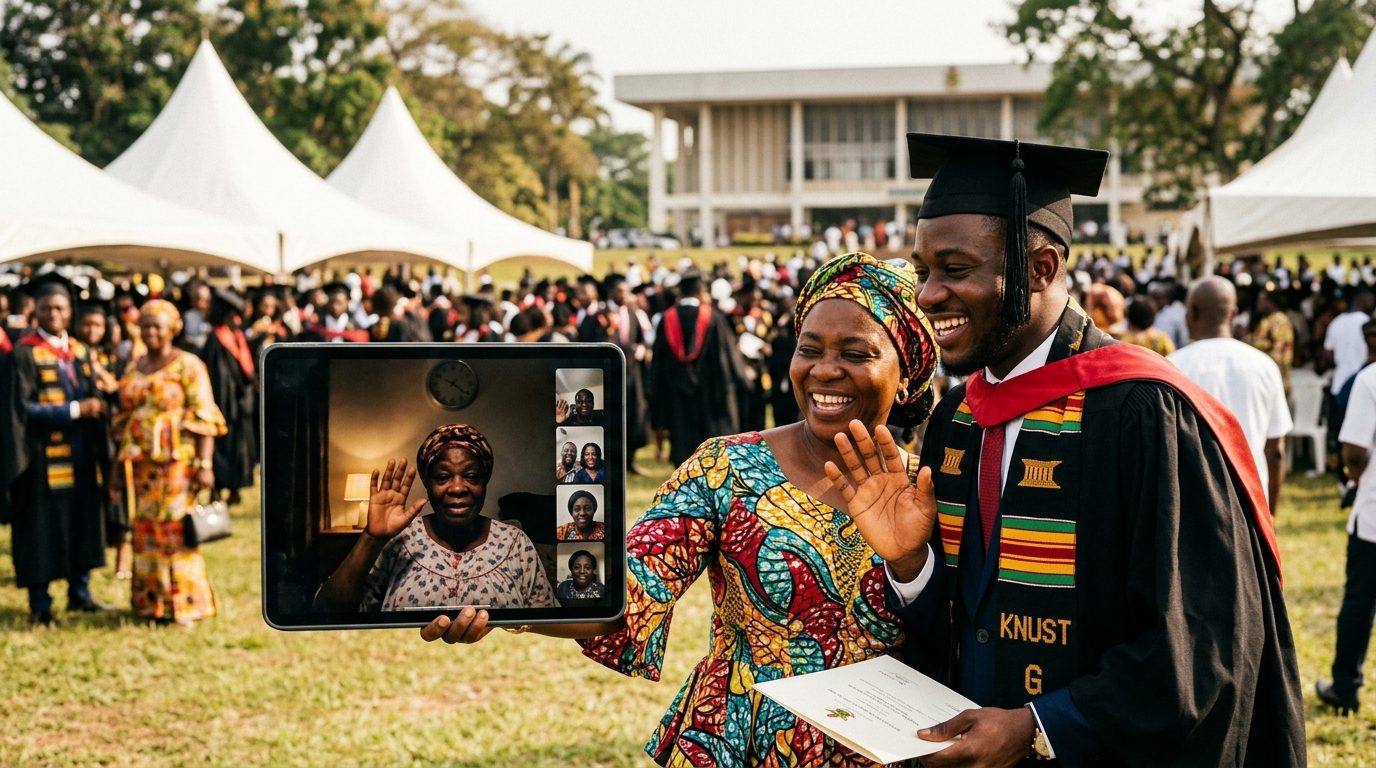
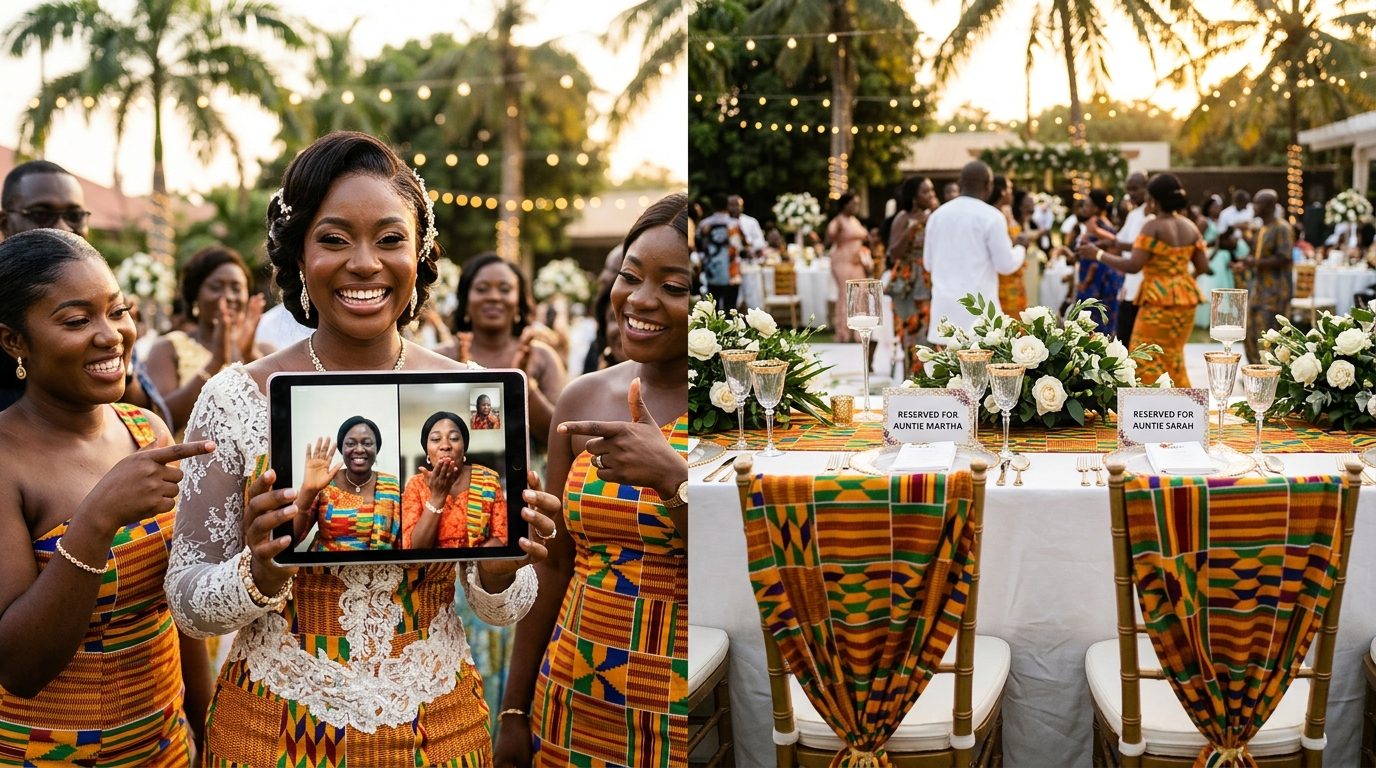
A group photo with the screen. The family on the ground stands together. The diaspora cousins on the livestream wave from their screens. Someone photographs the whole scene — bodies in Ghana, faces on the screen, family present together in the only way possible. This photograph ends up on the family wall.
These are not expensive additions. They are intentional ones.
The deeper truth about Ghanaian diaspora family
There is something about Ghanaian diaspora relatives that I want to name, because most couples planning weddings do not fully understand it.
The diaspora aunty in Toronto who has been sending money home for fifteen years did not do that for praise. She did it because she believed in the family. The diaspora uncle in Frankfurt who has paid school fees for two nieces did not do that to be thanked. He did it because that is what a Ghanaian uncle does.
These people do not need recognition. They need acknowledgement. There is a difference.
A wedding that publicly acknowledges the diaspora — by name, with what they contributed, in front of the whole family — does not embarrass them. It honours them. It says to everybody in the room and on the screen that this family knows what was done, and remembers, and is grateful.
This is what wedding planning in Ghana now needs to take seriously. The diaspora is not the audience. The diaspora is the chorus that has been singing all along, and the wedding is when the family finally sings back.
What I would say to every couple
Start six months early. Send the save-the-date before you send anything else. Consult them on the small things. Build the invitation around their experience. Plan the livestream like it matters. Name them on the day.
These six steps are not difficult. They take a few hours of intention.
The diaspora aunty in Toronto who feels included will fly home next time without being asked. The one who feels excluded will not. The choice is the couple's, and the choice is being made every time a wedding plan is started.
Akwaaba — welcome. Bring everybody home, whether their feet can make the journey or not. The wedding is bigger when the diaspora is part of it properly.
VibeLink builds interactive wedding invitations for couples in Ghana and across the diaspora. If you want yours done properly, we are here.
Edmund Adjekum
Founder of VibeLink Event — building beautiful digital invitations that honour the way Ghanaian families actually celebrate. From weddings in Kumasi to memorials in London, every event deserves an invitation as thoughtful as the moment.