How to Make Your Corporate Event Look World-Class Without a World-Class Budget

A Ghanaian startup founder asked me last year how a Lagos competitor had thrown what looked like a 200,000-dollar product launch on what he knew was a 25,000-dollar budget. He had been at the event. The lighting was good. The branding was tight. The room had felt premium. He could not figure out how they had done it on the money he knew they had.
A Ghanaian startup founder asked me last year how a Lagos competitor had thrown what looked like a 200,000-dollar product launch on what he knew was a 25,000-dollar budget. He had been at the event. The lighting was good. The branding was tight. The room had felt premium. He could not figure out how they had done it on the money he knew they had.
When I asked my contact at the Lagos firm, the answer was simpler than the Ghanaian founder had expected. They had made six specific decisions that delivered a world-class look without world-class spending. Each decision was small. The combination was the entire effect.
Most Ghanaian companies plan corporate events the same way: spend on the obvious line items, hope the rest works out. The companies producing premium-looking events at modest budgets do the opposite. They cut the obvious line items and invest in the invisible ones.
Here are the six decisions.
1. Spend less on the venue, more on the room
Most Ghanaian corporate event budgets allocate 25 to 35 percent to the venue. The brands producing premium-looking events spend 10 to 15 percent on venue, choose smaller spaces, and invest the savings in transforming the room.
A 150-person event in a 300-capacity hall looks half-empty. A 150-person event in a 180-capacity room feels intimate and premium. The same guests, the same catering, the same speakers — but the room reads completely differently.
Smaller venues are also cheaper. The savings go into lighting, branded signage, well-chosen furniture, and the kind of décor details that make people post photographs from the event.
The lesson: do not book the biggest venue you can afford. Book the smallest venue your guest count justifies, and invest the difference in making the room look exceptional.
2. Use lighting as the single biggest visual upgrade
If you had to spend GHS 10,000 on one element to make a corporate event look more premium, the answer is lighting. Not branding. Not catering. Not décor. Lighting.
Most Ghanaian corporate events use the venue's default overhead lighting. It is white, flat, and bright. It makes every photograph look like a daytime conference, regardless of how the event was supposed to feel.
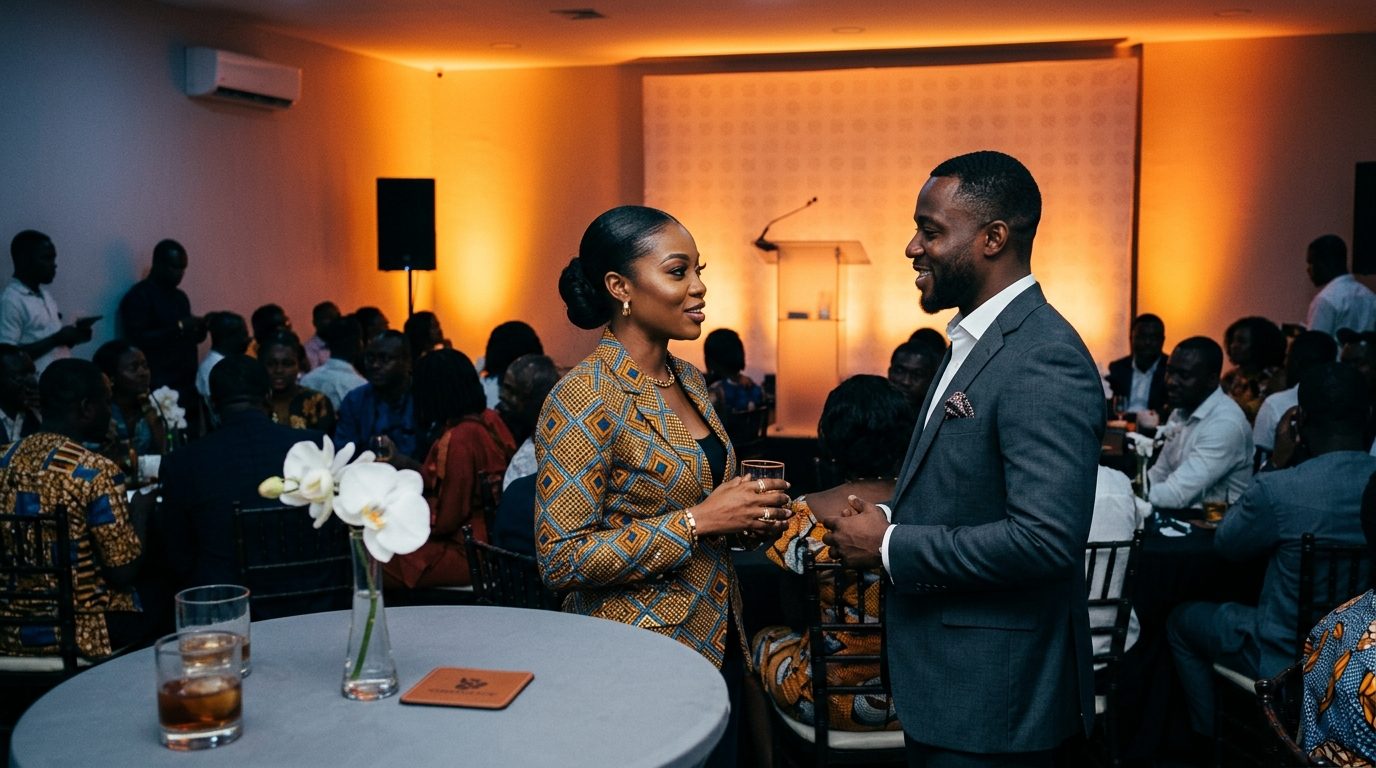
The brands producing premium events add three things. Coloured uplighting along the walls that matches their brand palette. Spotlights on the keynote area that frame the speaker properly. Reduced overhead lighting that lets the deliberate lighting do the work.
This costs GHS 8,000 to GHS 20,000 for a 200-person event, depending on the rental package. The transformation is visible the moment guests walk in. Photographs taken at the event look professional rather than stock. The room feels intentional rather than generic.
For most Ghanaian corporate events, lighting is the single highest return on investment in the entire budget.
3. Cut the speaker list
The default Ghanaian corporate event has too many speakers. Three keynotes. Two panels. Six brief executive remarks. By the end of the agenda, the audience has heard from a dozen people and remembered almost nothing.
Premium events cut the speaker list aggressively. One strong keynote. One short panel. One closing remark. The rest of the time is given back to the audience as conversation, food, music, or simply space.
Cutting speakers is free. It also produces a tighter, more memorable event. Audiences leave thinking about what they heard, not how exhausted they are by what they sat through.
The hard part is the politics. Senior people who expected speaking slots will not get them. This requires a marketing director with the standing to say no to the wrong speakers. The brands willing to have those conversations produce events that feel premium. The brands unwilling to have them produce events that drag.
4. Choose the catering style carefully
Buffet stations look operational. Plated dinners look formal but slow. The brands producing premium-feeling events have moved to a third option that costs less than plated and feels more premium than buffet.
Curated grazing tables. Small bite-sized portions, beautifully arranged on long shared tables. Guests serve themselves but the presentation is elevated. The cost per head is lower than a plated dinner because the kitchen is doing less complex work, but the visual impact is higher because the tables themselves become design statements.
This is one of the small details that signals premium without spending premium. A grazing table at GHS 250 per head feels more upscale than a plated dinner at GHS 450 per head. The math works in the brand's favour.
5. Build the brand consistency obsessively
Most Ghanaian corporate events have brand inconsistencies that drag down the perceived quality. The invitation uses one set of colours. The venue signage uses slightly different colours. The presentation deck uses different fonts. The thank-you cards use a different photograph treatment than everything else.
Each of these mismatches is small. The combination of them makes the event feel amateurish.
The brands producing premium events have a brand book, and they enforce it across every touchpoint. Same colours. Same fonts. Same photographic style. Same logo placement. Same tone of voice in every piece of copy.
This costs nothing extra. It requires the marketing team to actually maintain the brand book and refuse work that does not comply. The result is an event that feels cohesive in a way that no single element can produce.
Audiences cannot articulate why one event feels premium and another does not. The answer is often this. The premium event was brand-consistent across every touchpoint. The cheap-feeling event was full of small inconsistencies that the audience noticed without consciously processing.
6. Send the right invitation
This is the one most Ghanaian companies underweight, and it is the one that costs the least.
A premium event begins with a premium invitation. Before guests have entered the venue, before they have seen the lighting, before they have tasted the food, they have seen the invitation. The impression formed by the invitation persists through the entire event.
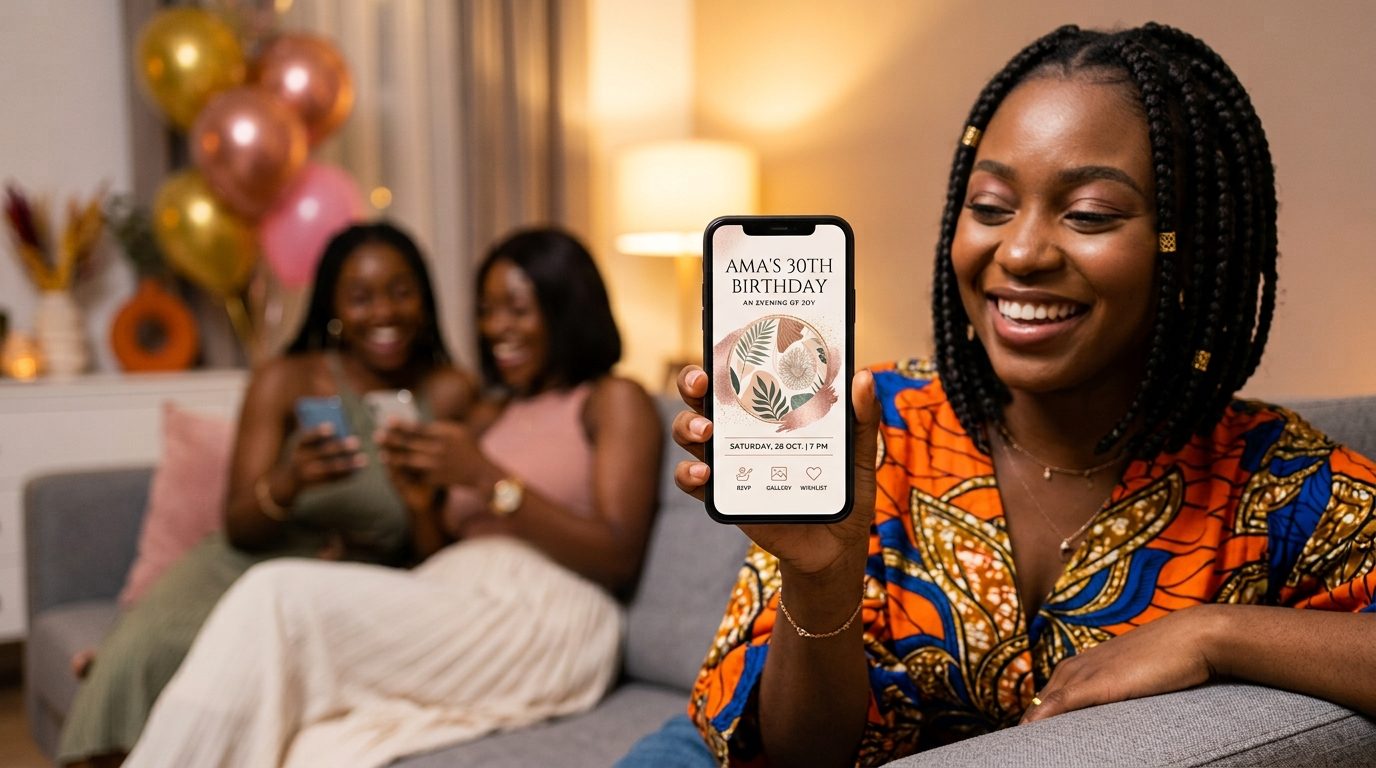
A polished digital invitation, with the brand's typography, the brand's photography, the brand's voice, and a clean RSVP flow, costs GHS 3,000 to GHS 8,000. It is the single cheapest piece of premium signalling available.
Most Ghanaian companies skip this. They email a PDF. They send a WhatsApp flyer. They use a generic event template from an online tool. The result is an invitation that signals "ordinary" before the recipient has even decided whether to attend.
The brands producing premium events get this right. The invitation is the first piece of the event the audience experiences, and it sets the tone for everything that follows.
What this adds up to
Smaller venue. Better lighting. Fewer speakers. Smarter catering. Brand consistency. Premium invitation.
None of these decisions require a world-class budget. They require a marketing team with the discipline to make different choices than the default. The combined effect is an event that looks like it cost two or three times what it actually cost.
The Lagos firm my Ghanaian founder asked me about had not spent 200,000 dollars. They had spent 25,000 dollars more carefully than most companies spend 150,000.
What I would say to every marketing director
Before your next event, look at your budget. Identify the line items where you are spending out of habit rather than out of strategy. The venue you booked because that is where everybody books. The speaker list you have because not inviting them would offend. The catering style you chose because it is the default.
Then make different choices. Smaller venue. Better lighting. Shorter agenda. Curated catering. Consistent branding. Properly designed invitation.
Your event will look more premium than the budget suggests. That perception will outlast the event itself, and it will shape how your brand is talked about in the weeks that follow.
VibeLink builds polished digital invitations for corporate events in Ghana. If your brand deserves a proper invitation, we are here.
Edmund Adjekum
Founder of VibeLink Event — building beautiful digital invitations that honour the way Ghanaian families actually celebrate. From weddings in Kumasi to memorials in London, every event deserves an invitation as thoughtful as the moment.