From WASSCE to PhD — How Ghanaian Families Are Redefining What Academic Celebration Looks Like

Twenty years ago in Ghana, a graduation looked one way. There was a hall ceremony. There were photographs in a garden. There was a lunch with extended family at home. There was a small gift, often a wristwatch or a Bible. The day was warm but contained.
Twenty years ago in Ghana, a graduation looked one way. There was a hall ceremony. There were photographs in a garden. There was a lunch with extended family at home. There was a small gift, often a wristwatch or a Bible. The day was warm but contained.
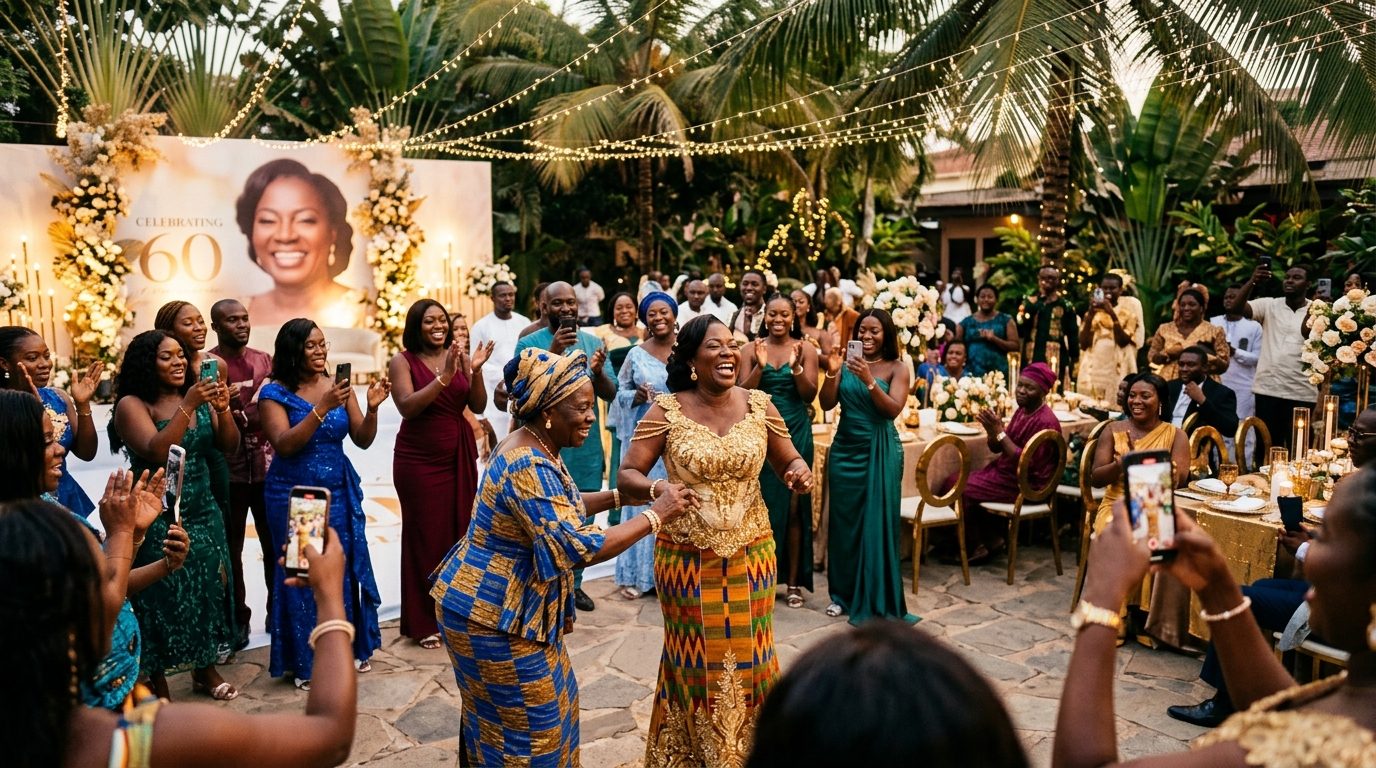
In 2026, the same milestone looks different. There is a thanksgiving service at the family's church. There is a reception with seventy to two hundred guests. There is a livestream for the diaspora. There are pre-graduation photoshoots that take a full Saturday. There are speeches from siblings who flew in from London. There are video tributes from cousins in Toronto.
This is not just inflation of the form. It is a quiet redefinition of what academic celebration means in Ghana. Three things are driving it, and the families who understand them are setting the new standard.
What is actually changing
The Ghanaian family unit is now diaspora-shaped. Most Ghanaian university graduations in 2026 have at least one sibling, parent, aunty, uncle, or cousin abroad who contributed financially or emotionally to the journey. When the celebration is being planned, those people are no longer afterthoughts. They are at the centre. A celebration that does not include them is no longer acceptable. Diaspora family expects to be invited, expects a livestream, expects a tribute slot, expects a way to send a gift.
Social media has raised the bar for visual expectations. The 2026 university graduand has been watching Ghanaian wedding photography on Instagram for ten years. They have seen what an event can look like. They have specific expectations for their own day. Pre-graduation photoshoots, gown-and-veil compositions, professional video edits, branded social media handles for the day, themed colour schemes — all of this is now standard for the families who can afford it, and aspirational for the families who cannot.
The achievement is being recontextualised. A Ghanaian graduating in 2026 is often the first PhD, the first lawyer, the first doctor, the first chartered accountant in their family. The family knows this. They want the day to mark the breaking of a pattern that has held for generations. A small lunch does not say "we have broken a pattern." A proper celebration does.
These three forces, together, are pushing Ghanaian academic celebrations from "warm and contained" to "full-scale family thanksgiving." This is a good thing. The families who lean into it produce days they remember for the rest of their lives.
What good looks like at each level
The new Ghanaian graduation celebration is not one-size-fits-all. The shape changes with the qualification.
WASSCE results day. This is a moment the new generation is starting to celebrate that the old generation did not. The day the results come out is a family moment. A small lunch. A prayer of thanksgiving. A short call to the diaspora aunty who paid the school fees. This costs nothing but takes about two hours of planning. Most families still do not do it. The ones that do create a memory that lasts.
SHS graduation reception. A proper reception of thirty to seventy guests. The graduand wears their school colours or a fitted outfit. There is a programme with a tribute video, parental speeches, and the graduand's own first formal address. There is food and music. The diaspora joins by livestream and contributes by MoMo. Total budget can range from GHS 3,000 to GHS 30,000 depending on the family. The principle is the same.
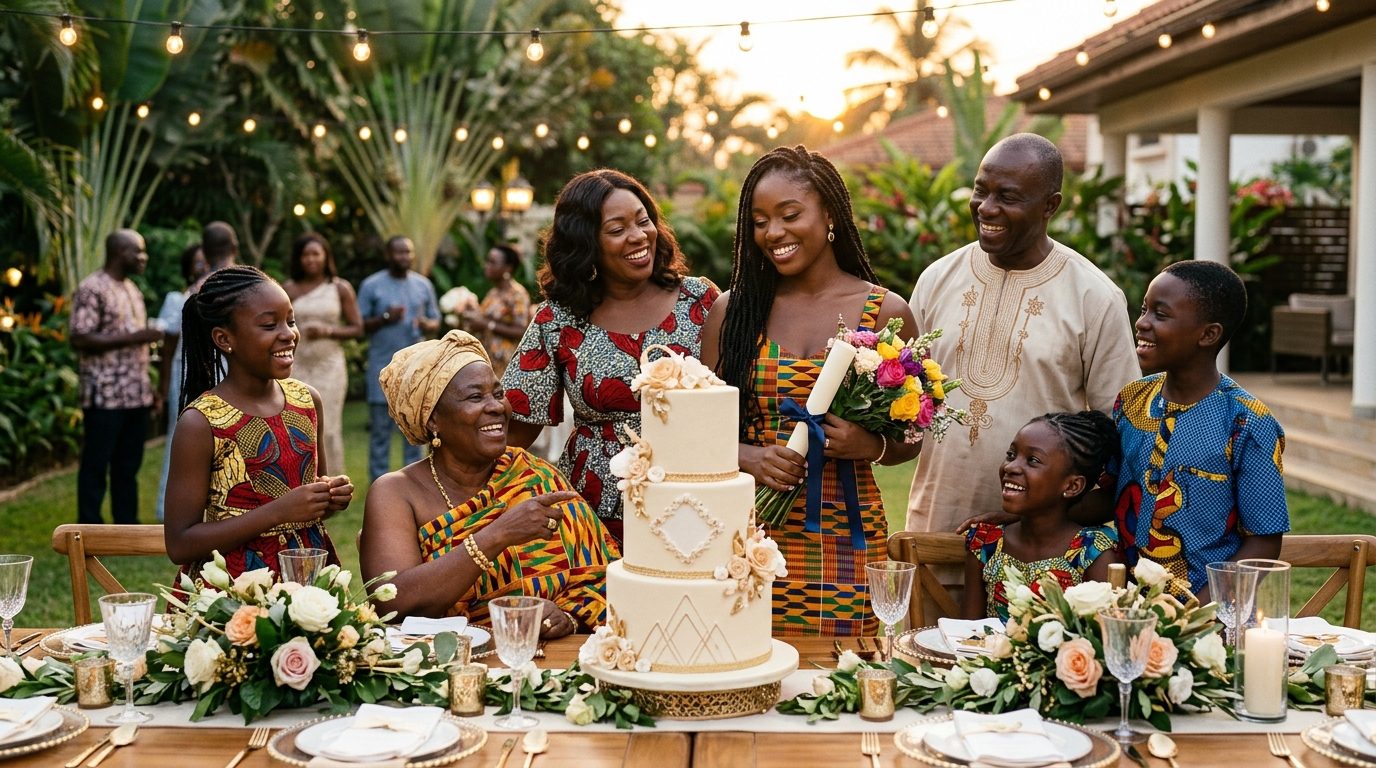
University graduation thanksgiving. This is the day Ghanaian families now invest in heavily. A thanksgiving service the morning of the graduation, the hall ceremony at midday, photographs through the afternoon, and a reception in the evening. Hundred to three hundred guests. The graduand's gown features prominently. The supporters are named publicly. The diaspora is included properly. The total programme runs from breakfast to about 10 p.m. and uses every minute.
Masters or professional certification. The professional milestone gets its own treatment now in a way it did not before. A smaller, more polished event. Forty to a hundred guests. More industry-focused — colleagues attend, mentors are recognised, the certifying body is named with respect. The food and music are more grown-up. The celebration says "I am now a professional."
PhD or terminal qualification. This is the celebration that families are still figuring out how to mark. The PhD takes seven to twelve years. The family has lived through it. The candidate has often defended the thesis in front of foreign examiners months before the day. By the time of the graduation, the academic part is over and the celebration is almost a thanksgiving.
The best PhD celebrations I have seen in Ghana have one thing in common. They tell the story. The journey from the first secondary school certificate to the last terminal qualification gets traced, in speeches and photos, so the family understands what has just been completed.
Three things every modern celebration should do
Across all levels, three habits separate the celebrations that work from the ones that do not.
Tell the supporter story. Name every person who made the day possible. The financial supporters. The emotional supporters. The teachers. The mentors. The siblings. The diaspora cousins. A graduation programme that includes a "thank you" section with real names is a different document from one that does not.
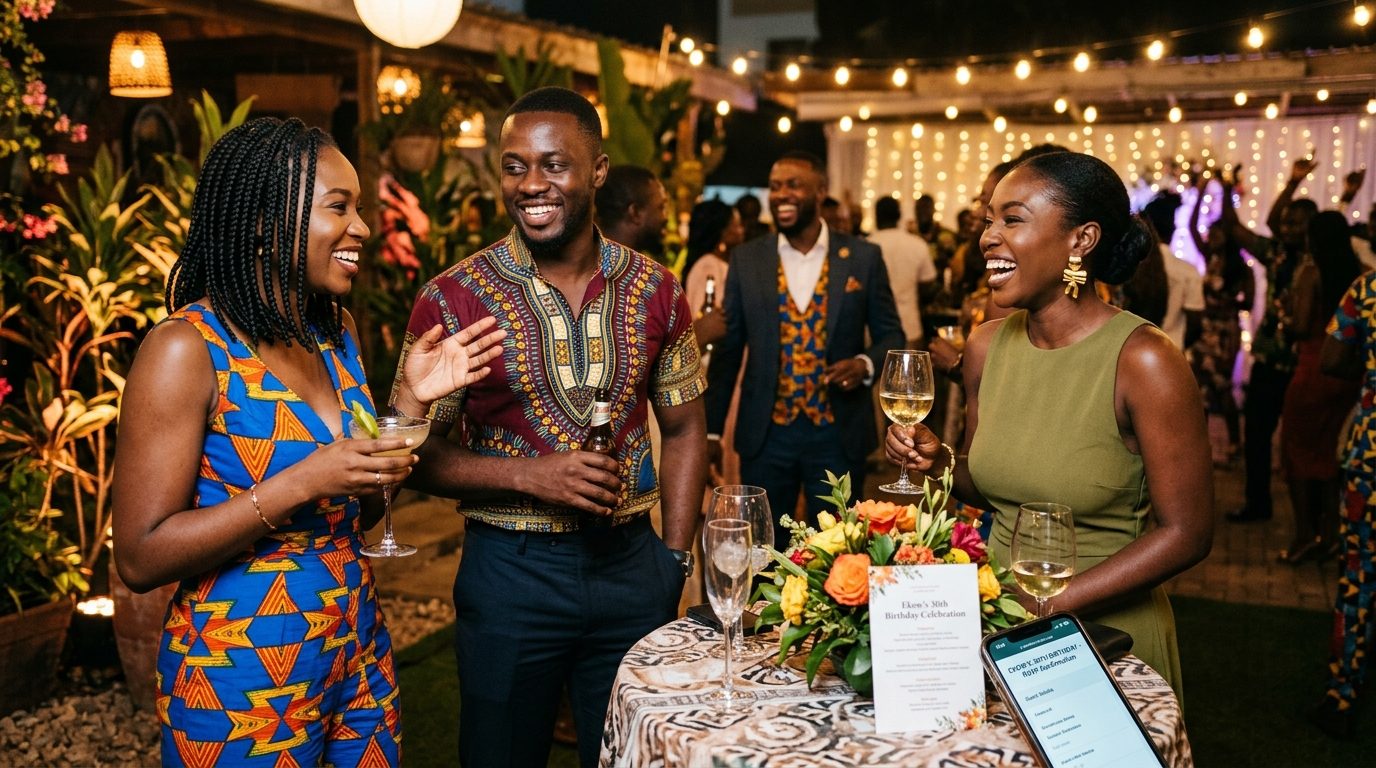
Use the right invitation for the right level. A WASSCE results lunch needs a casual WhatsApp invite. An SHS reception needs a proper short invitation. A university graduation needs the full digital invitation experience, including diaspora-friendly features, a livestream link, and a gift-sending route. A PhD celebration needs an industry-grade invitation that reflects the gravity of the achievement.
Archive the day. Not just photos. Video clips of the toasts, the prayers, the family blessings. A short edited tribute video that combines diaspora messages with on-the-ground moments. These archives become the memory of the day for the rest of the family's life. Ten years from now, the graduand will go back to them. So will their children, when they ask "what did your graduation look like?"
What I would say to families starting this journey
If you are a Ghanaian family with a young person in basic school today, you have ten to twenty years of graduations ahead of you. Each one is a chance to do this well or to do it lazily.
The families who do it well start treating each milestone seriously from the first one. The basic school party. The SHS thanksgiving. The university reception. The professional certification celebration. The PhD if the family is blessed with one.
Each ceremony reinforces the next. The child who is celebrated at basic school learns to expect celebration at SHS. The graduate who is celebrated at university learns to mark their professional milestones. The PhD candidate who got their first thanksgiving at WASSCE comes back to the family ten years later, with a doctorate, and the family already knows how to celebrate.
This is how academic culture builds in a family. Not by waiting for the big one. By taking each one seriously when it comes.
Yɛda mo ase — we thank you. Every certificate is a story. Tell it properly when the day arrives.
VibeLink builds celebration-ready digital invitations for Ghanaian graduations. If you want your moment honoured properly, we are here.
Edmund Adjekum
Founder of VibeLink Event — building beautiful digital invitations that honour the way Ghanaian families actually celebrate. From weddings in Kumasi to memorials in London, every event deserves an invitation as thoughtful as the moment.