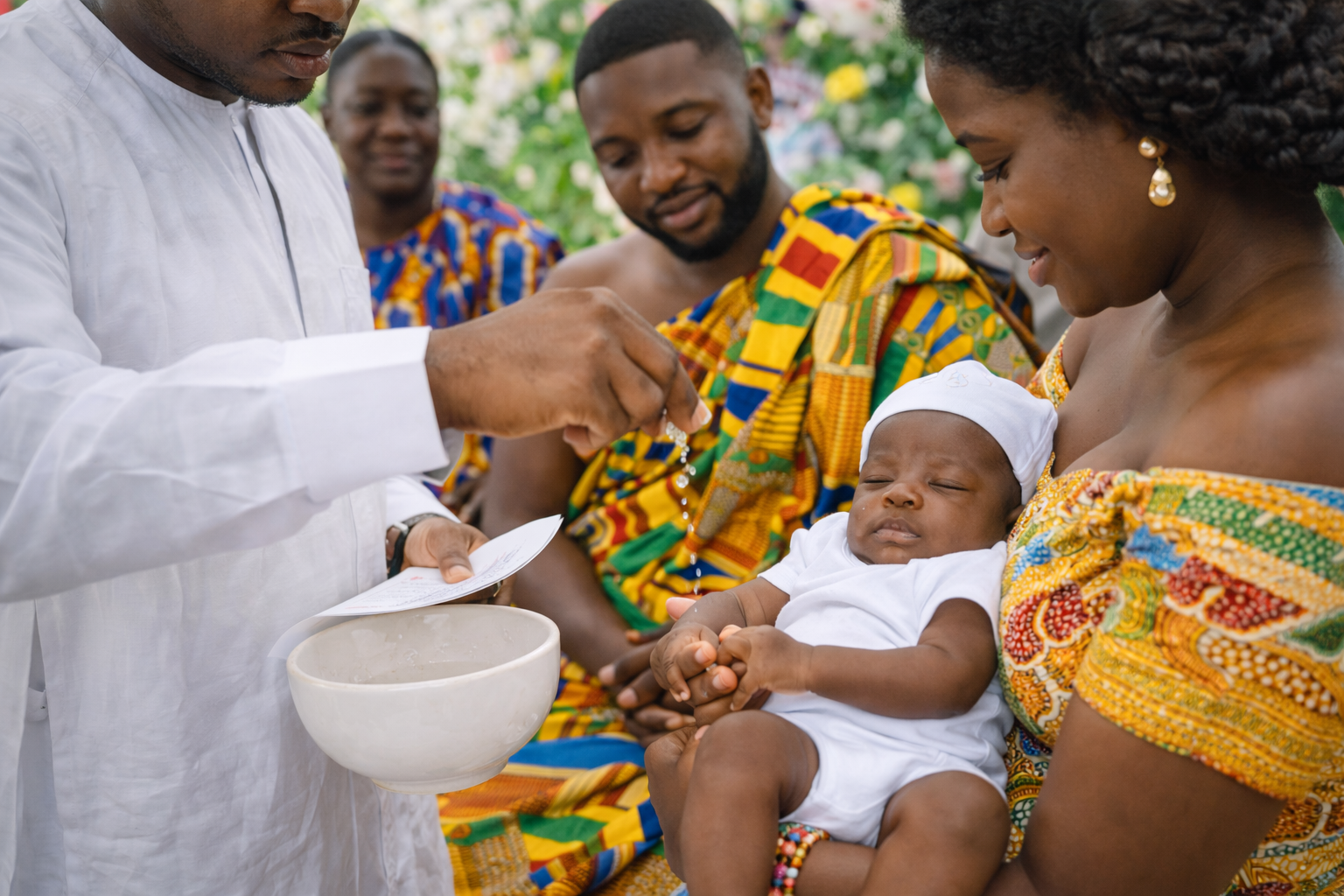
Twenty years ago, a Ghanaian outdooring looked one way. The family gathered in the family house on the eighth day after the birth. An elder poured libation. The name was given. Aunties brought food. Uncles brought blessings. The baby was held by every grandmother in the room. By 3 p.m. everyone had eaten, blessings had been spoken, and the baby was officially a member of the community.
In 2026, an outdooring still has all of these elements at its core. But around the core, something has changed. Modern Ghanaian families have begun to treat the outdooring with the same care they would give a small wedding. Not because tradition has weakened. Because the tradition is being honoured more fully than it used to be.
Here is what modern Ghanaian outdoorings now look like, and what families who are doing it well have in common.
The shift in expectationThe most important shift is one of expectation. A generation ago, an outdooring was a family event handled by the family. Catering by the aunties. Photography by whoever had a camera. Announcements by phone calls and visits. The whole ceremony was kept inside the household.
Today, Ghanaian families approach an outdooring more deliberately. They book a photographer. They plan the décor. They design an invitation. They coordinate the diaspora family. They prepare a programme. They think about what the day will look like in photographs ten years later.
This is not Westernisation. This is Ghanaian families saying that an outdooring is a moment worth treating with the same care as a wedding or a graduation. The baby will only be outdoored once. The day should look like the family knew it.
What modern style actually meansThere are five elements that distinguish a well-styled Ghanaian outdooring from a casual one.
A theme that reflects the family
The colours of the day, the design of the invitation, the cake, the décor, all tied together by a single visual identity. Some families lean into Akan or Ga traditional themes with rich kente and earth tones. Some prefer modern minimalism with soft pastels. Some bridge both, with traditional cloth and contemporary design. The theme does not have to be expensive. It has to be intentional.
Professional photography
A photographer who knows how to capture the small details of the day. The first hold by the grandfather. The hand of the elder during the naming. The aunty wiping a tear during the prayer. Phone photographs from family members are still welcome, but a Ghanaian outdooring in 2026 typically has at least one professional photographer assigned to the family for the morning.
A properly designed invitation
Not a WhatsApp message saying "come for the outdooring." A real digital invitation with the baby's family name, the date, the venue, the schedule, the dress code, the diaspora livestream link. The invitation sets the tone for the day. A serious invitation tells guests this is a serious moment.
A small programme
The traditional outdooring already has a programme of sorts. The libation. The naming. The blessings. The food. Modern families build on this by adding a short tribute reading from the parents, a brief introduction of who the baby is named after if the name carries family heritage, and a moment to acknowledge the diaspora relatives watching from abroad. The programme runs no more than 90 minutes. Within that, the family says publicly what this baby's arrival means.
A keepsake from the day
Sometimes a small printed booklet with photographs and the meaning of the baby's name. Sometimes an online gallery the guests can revisit. Sometimes a video edit that captures the whole morning in three minutes. The keepsake is what the family returns to when the baby has grown up.
The role of the invitationOf all the modern additions to a Ghanaian outdooring, the invitation is the one that most quietly transforms the experience.
A traditional outdooring invitation was a phone call. The aunty was called. The uncles were called. The neighbours were called. Everybody who needed to be there was reached in some way. This worked when families were small and concentrated.
In 2026, with families spread across cities and continents, the phone-call invitation has limits. It misses people. It varies in tone depending on who is calling. It conveys no visual sense of the day to come.
A proper digital invitation page solves three problems at once.
It reaches everybody. The family WhatsApp group, the church group, the workplace contacts, the diaspora aunties all get the same link. Nobody is left out because somebody forgot to call them.
It sets the tone visually. The colours, the photography, the design language of the invitation all signal what kind of day this is going to be. Guests arrive prepared.
It manages the practical details. The schedule, the venue map, the dress code, the parking, the RSVP, the diaspora livestream link, the contribution channel for the baby's first savings. All in one place. The bereaved-to-be parents do not have to manage this with thirty separate WhatsApp messages.
For most modern Ghanaian outdoorings, the invitation is what transforms an event from a small family gathering to a properly celebrated arrival.
The diaspora factorModern Ghanaian outdoorings cannot ignore the diaspora. This is now a defining feature of how the ceremony has changed.
In 2026, most newborn Ghanaian babies have grandparents, aunties, or uncles abroad. Sometimes the parents themselves are abroad and travelling home for the outdooring. Sometimes one parent is on the ground and the other is in the diaspora. Sometimes the entire wider family is abroad and only the immediate household is in Ghana for the day.
Whichever the case, the outdooring has to bridge the distance. A livestream from the family home. A virtual condolence book where diaspora aunties can leave their blessings. A tribute video from the grandparents in London or Atlanta that plays after the naming. A way for the cousin in Hamburg to send a small contribution toward the baby's first savings account.
None of these are expensive. All of them are intentional. The diaspora-inclusive outdooring is now the default for most middle-class Ghanaian families, and the families who do it well report that the diaspora aunties feel more connected to the new baby than they would have without it.
What this does not have to costI want to be careful about one thing. Modern outdooring style does not require a wedding-scale budget. A beautifully themed outdooring with professional photography, a proper invitation, and a small programme can be done in Accra for between GHS 4,000 and GHS 15,000 depending on family size and choices.
The cost is in the intention, not the spending. A family that thinks carefully about the visual identity, the photography, the invitation, the programme, and the keepsake will produce a beautiful outdooring whether their budget is GHS 4,000 or GHS 40,000.
What gets in the way of beautiful outdoorings is not money. It is treating the day as routine. The families who treat it as significant produce significant days.
What I would say to expectant parentsYou have eight days from the birth, or however long your family tradition holds, to plan this ceremony. That is not much time. But it is enough time to do it well if you start on day one.
Decide what kind of outdooring you want before the baby is born. Have the rough theme in mind. Identify the photographer you would call. Know which family elder will perform the rites. Think about how the diaspora will be included.
When the baby arrives, the planning takes hours, not weeks. The invitation goes out within 48 hours. The diaspora is told within 24. The professional photographer is booked within three days. By the day of the outdooring, the whole machine is ready.
Your baby will only be outdoored once. The day will live in photographs, in family stories, in the diaspora aunty's memory, in the keepsake the family makes. Build it with the care that one-time moments deserve.
VibeLink builds welcoming digital outdooring invitations for Ghanaian families.
If you want to introduce your baby to the world properly, we are here.
Found this useful? Share it