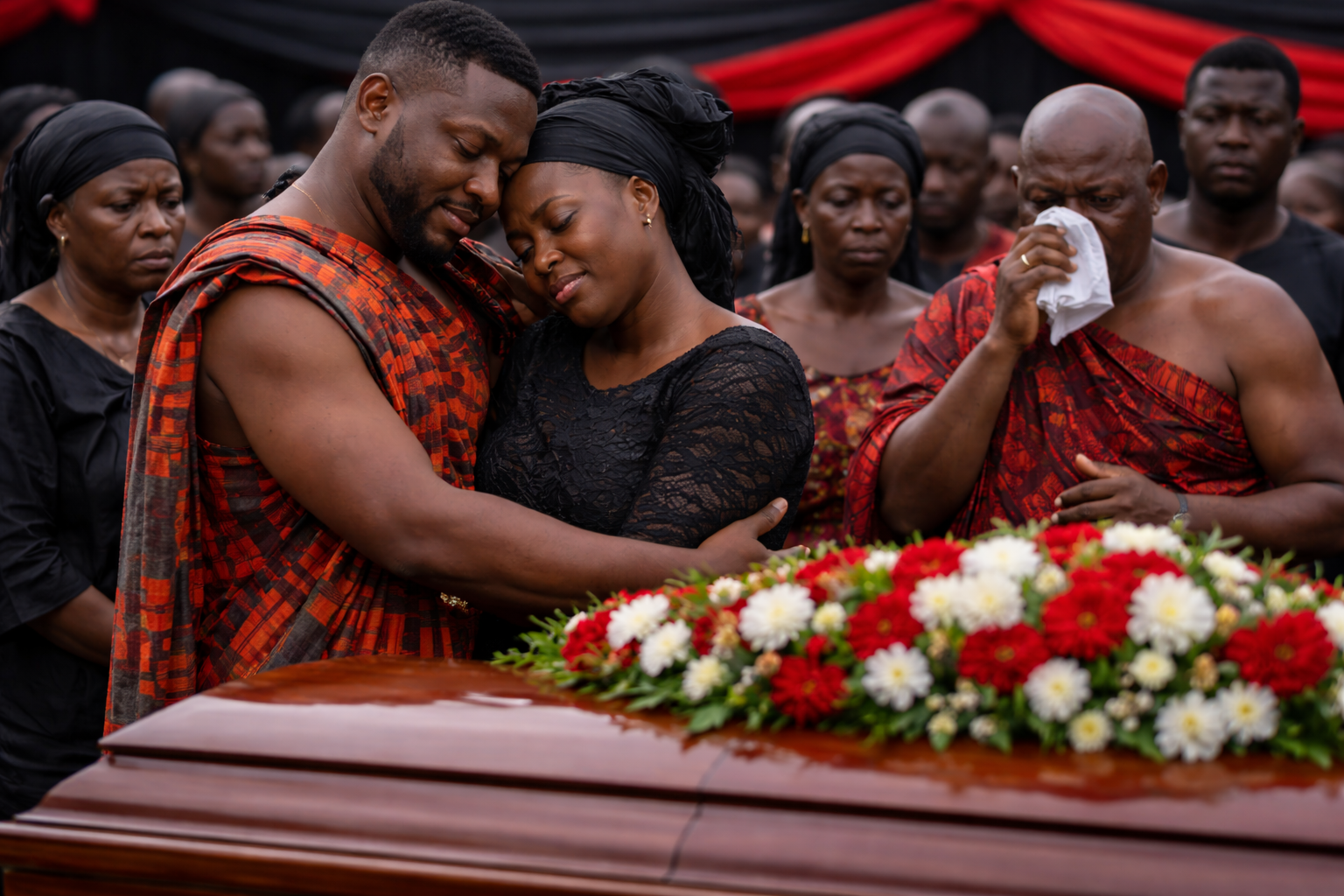
Ghanaian funerals have always been built on dignity. The elders preparing the body. The colour of the cloth. The careful order in which the family stands. The exact placement of the photograph at the front of the hall. The lineage being named correctly in the obituary. None of this is incidental. It is how a community has, for generations, said to a departing soul: we saw you, we honoured you, we will carry your name.
What has changed in the last few years is not the principle. It is the form.
The dignity of a Ghanaian funeral in 2026 is still built on the same foundations. But it is being expressed in ways the generation before could not have imagined. This article is about those new forms, and how thoughtful families are using them without losing what made the old ways meaningful.
The old forms are still the centreBefore anything else, this needs to be said clearly. The new digital tools have not replaced the printed Order of Service, the biography booklet, the family cloth, the lying-in-state, the funeral procession, the burial rites. These remain at the centre of a Ghanaian funeral and should.
What digital tools have done is add things that the old forms could not do. They do not compete with the printed booklet handed to a guest at the hall. They sit alongside it, doing different work.
A family that understands this builds a stronger funeral than one that picks one and abandons the other.
What dignity actually looks like nowThere are five practical things modern Ghanaian families are doing to honour their dead with more dignity than was possible ten years ago.
They build a memorial page that the whole world can find
Not a Facebook post. A dedicated page with the deceased's name, photograph, life story, family, dates of significance, and the funeral details. A relative in Toronto types the name into a search engine in November 2026 and the page is there. A grandchild born in 2034 looks up their grandmother's name and finds the page their family built. This is permanence. It is the digital equivalent of the family compound's framed photograph, but it is also searchable, shareable, and accessible across generations.
They publish a real obituary, written carefully
Not a 70-character WhatsApp announcement. A proper obituary that tells the deceased's story. Where they were born. Who their parents were. What they did with their life. What they were known for. Who survived them. The obituary is shared via the memorial page and via the family's announcement channels, but it is written with the care that the printed obituaries of the 1970s used to receive.
They include the diaspora in real time
A livestream of the church service so the daughter in London can attend. A livestream of the family gathering so cousins in Frankfurt can be present. A virtual condolence book where diaspora family can leave their tribute. A MoMo or international payment route for contributions. All of this turns a funeral from an event-in-Accra into a family-wide moment that includes everybody.
They keep an archive that outlasts the day
A short edited video of the eulogies, the tributes, the family blessings. A gallery of the photos. A recording of the choir's offertory. This archive is shared with the family afterwards and kept on the memorial page indefinitely. Ten years later, a grandchild can watch their grandmother's funeral. This is not a small thing. It is a form of dignity that previous generations would have envied.
They collect tributes from beyond the immediate family
A digital condolence book on the memorial page lets old friends, former colleagues, distant relatives leave a note. The widow reads them weeks after the burial. The children read them years later. The granddaughter, decades later, learns what people thought of the grandmother she barely remembers.
Dignity in the detailsWhat separates a properly dignified modern funeral from a poorly executed one is almost always the small details.
The photograph chosen for the memorial page should be a portrait the deceased would have been proud of. Not a candid snapshot. Not a low-resolution group photo cropped down. The right photograph, in the right composition, with the right framing. This is the image the deceased's name will carry online for the rest of time. Choose it like that.
The obituary should be written by a family member who knew the person well. Not by a designer. Not pulled together from short WhatsApp contributions at midnight. Sat down with, drafted carefully, edited by the family elder who knows the right wording. A proper Ghanaian obituary takes about an hour to write well. Most families now write theirs in fifteen minutes. The difference shows.
The diaspora livestream should be properly arranged. Not a phone propped up against a chair. A real arrangement with a stable camera, a wired audio feed if possible, a backup phone running a parallel stream. The aunty in Berlin who is watching her brother's funeral from a couch at 11 p.m. deserves a feed that does not freeze at the worst moment.
The memorial page should be kept alive after the funeral. Not deleted three months later. Maintained. Visited on the deceased's birthday. Used as the place where the family gathers virtually for anniversaries. This turns the page from a one-time funeral artefact into a living memorial.
Where families go wrongThe mistake I see most often in modern Ghanaian funerals is treating the digital additions as a marketing exercise. The funeral becomes about Instagram-worthy photos rather than the dignity of the deceased. The memorial page becomes a brand statement rather than a place of honour. The livestream becomes a public broadcast rather than a private inclusion.
This is the opposite of dignity. It is performance.
The test for whether a digital element belongs at a Ghanaian funeral is simple. Would the deceased have wanted this? Would the family elders find it appropriate? If both answers are yes, include it. If either answer is no, leave it out.
Most digital additions pass this test when used with intention. Memorial pages, real obituaries, diaspora livestreams, family archives, condolence books — none of these are improper. They are extensions of what Ghanaian families have always done.
What I would say to families planning a funeral nowStart with the dignity, then choose the tools. Not the other way around.
Ask the family what the deceased would have wanted. Ask the elders what is appropriate. Then decide which of the modern tools fit, and which do not.
A funeral that uses all five modern elements I described, but does each one with the same care the family would have given the printed Order of Service in 1985, is a more dignified funeral than the one it would have been without them.
A funeral that uses none of them and sticks entirely to the old forms is also dignified, if that is what the family chooses.
What is not dignified is half-effort in either direction. A printed booklet thrown together at the last minute, or a memorial page built without thought.
The dignity is in the care, not in the medium.
VibeLink builds dignified digital memorial pages for Ghanaian families.
If your family is preparing to honour someone, we are here.
Found this useful? Share it