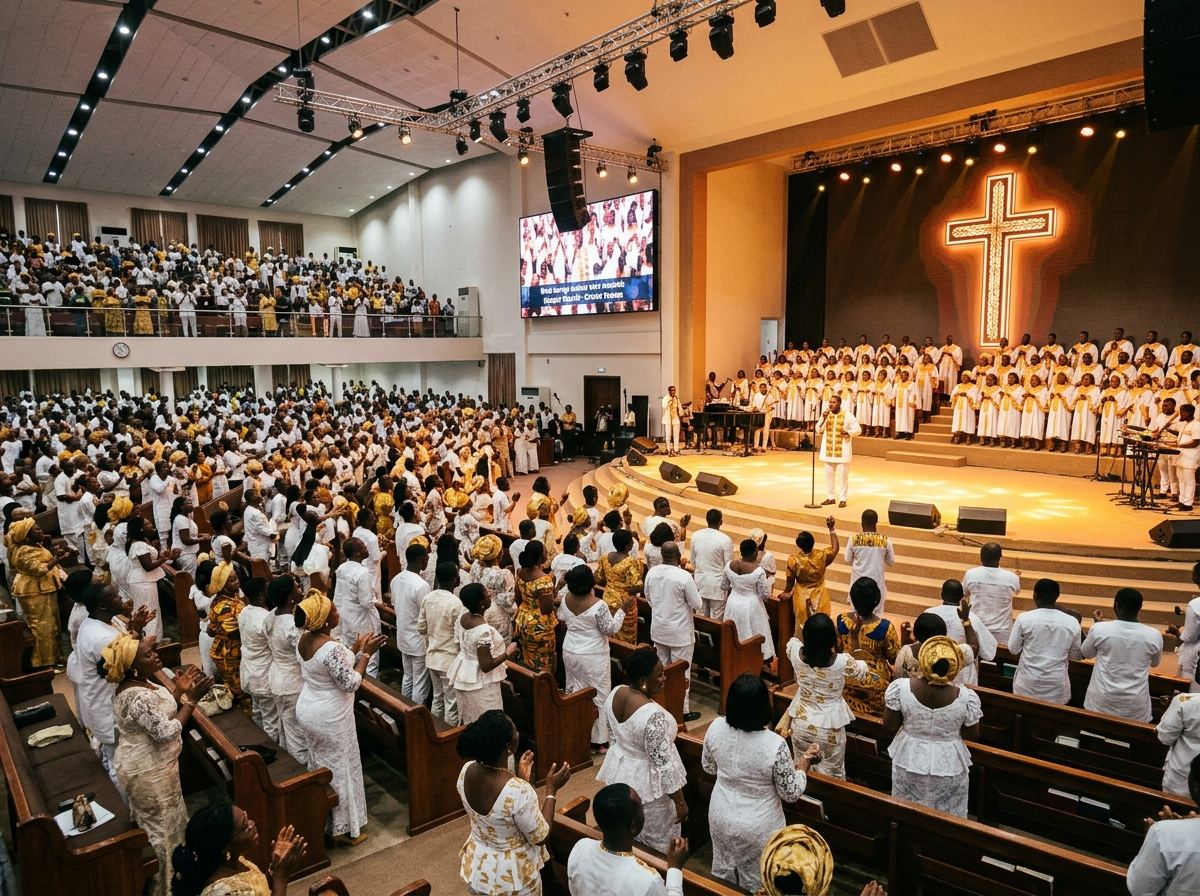
Walk into most Ghanaian churches on a Sunday morning in October and you will see, on the noticeboard near the entrance, a printed flyer announcing the upcoming harvest service. The flyer is bright. It has the church's logo. It has the date and the theme verse. It has been there for three weeks.
Outside the church, almost nobody has seen this flyer. It is invisible to anybody who does not walk past the noticeboard. It is unsharable. It cannot be forwarded. It does not exist in the WhatsApp groups, the social media feeds, the email inboxes of the wider community the church is trying to reach.
This is the quiet problem with how most Ghanaian churches announce their major events. The communication infrastructure is built for the congregation that already attends. It does not reach the congregation the church wants to grow.
A harvest is one of the biggest moments in the Ghanaian church calendar. It deserves an announcement that matches its importance. This article is about why the noticeboard flyer is no longer enough, and what churches that are serious about their harvests are now doing instead.
What a harvest actually is forA Ghanaian church harvest is not just a thanksgiving service. It is the church's annual moment of public gathering. It is when families return to the church they grew up in. It is when distant members reconnect. It is when the wider community is invited in. It is when financial contributions support the church's work for the year ahead.
A successful harvest builds the church's relationships, attendance, and finances simultaneously. A poorly communicated harvest does only the basic version of any of these.
The difference between the two is almost entirely a question of who knows about the event, when they know about it, and whether they are reached in a way that lands.
Who the noticeboard missesThe noticeboard flyer reaches three groups. The people who are at church the Sunday the flyer goes up. The people who walk past it during the week. The people who are told about it by the people in the first two groups.
Everyone else is missed.
The young person who has moved to a different city for university but who would have come home for the harvest if invited properly. The diaspora family member who is making travel plans for the year and might have planned to be home for the harvest. The neighbour who attends a different church but who would have come to your harvest if it had felt like an invitation. The young professional who attended your church as a child but who no longer comes regularly.
These are not edge cases. These are exactly the people a Ghanaian church most wants to reach with a harvest. They are the people the noticeboard cannot find.
What an inviting harvest announcement looks likeA church that takes its harvest seriously builds an announcement that reaches everybody the noticeboard misses. The infrastructure is simple but requires the church to think differently about communication.
A shareable digital invitation
A link that can be forwarded in any WhatsApp group, on any social media platform, in any email chain. The link opens to a page with the church's name, the harvest theme, the date, the schedule, the venue with map, and a way to RSVP. This single asset extends the reach of the harvest from the church walls to wherever the church's community now lives.
An RSVP that lets members invite others
A button on the invitation page where members can confirm they are coming and indicate how many guests they are bringing. This converts each existing member into a potential evangelist for the harvest. Members who would have come alone now invite their cousins, their colleagues, their neighbours.
Diaspora-friendly schedule information
Display the start time in the relevant time zones. Provide a livestream link for those who cannot attend physically. Make it easy for diaspora members to send their tithes and offerings online during the service. The harvest now reaches the diaspora congregation that the noticeboard could never have included.
A countdown that builds anticipation
The page shows the days remaining until the harvest. Members open the page over the weeks before the service, watch the countdown shrink, and feel the harvest approaching. The harvest becomes present in their awareness in a way the static noticeboard flyer never achieves.
These four elements together transform the church harvest from an internal event with a flyer into a public moment with a real reach.
What this costs the churchThe biggest concern most Ghanaian church leadership raises is cost. Will this new communication approach require a budget the church does not have?
The honest answer is no. A proper digital harvest invitation costs between GHS 1,500 and GHS 4,000 to design and host for the season, depending on complexity. For a church with even a modest annual budget, this is a fraction of one percent of harvest contributions, and the increase in attendance and contributions more than covers the cost.
The bigger constraint is not money. It is internal capacity. Most Ghanaian churches do not have a dedicated communications person. The pastor or an administrative volunteer handles announcements alongside their other duties. The transition to a digital-first communication approach requires either training an internal volunteer or partnering with a service that handles the work for the church.
Either is achievable. The church that decides this matters can resource it.
Why this matters spiritually, not just practicallyThere is a deeper reason why the noticeboard-only approach is no longer adequate, and I want to name it directly.
A Ghanaian church exists not just to serve its current congregation but to bring others into the fellowship. The Great Commission is a call to reach beyond the building. A communication infrastructure that only reaches the people already inside the building is structurally limiting the church's mission.
The young person who has drifted from the church. The neighbour who is curious but has never been invited. The diaspora family member who would still attend their home church if they were properly included. These are people the church should be reaching. The noticeboard does not reach them.
The digital harvest invitation is not a technology upgrade. It is an extension of the church's calling. It is the church saying to its wider community: we have not forgotten you, we still consider you part of us, please come and worship with us.
That is a different message from "harvest service this Sunday." The first reads as invitation. The second reads as bulletin.
What I would say to every church leadershipYou have a harvest coming. Or a thanksgiving. Or an anniversary. Or a special service that you want the wider community to attend.
Build the announcement to match the importance of the day. Do not rely on the noticeboard alone. Create a shareable digital invitation that members can forward, that diaspora can access, that builds anticipation in the weeks leading up to the service.
The harvest will reach the people the noticeboard cannot reach. The contributions will reflect the wider community that has been brought in. The fellowship will deepen because more people will have been invited properly.
This is not a question of new technology. It is a question of whether the church's communication keeps pace with where its people actually are.
VibeLink builds professional digital invitations for church events in Ghana.
If your congregation deserves a proper invitation, we are here.
Found this useful? Share it