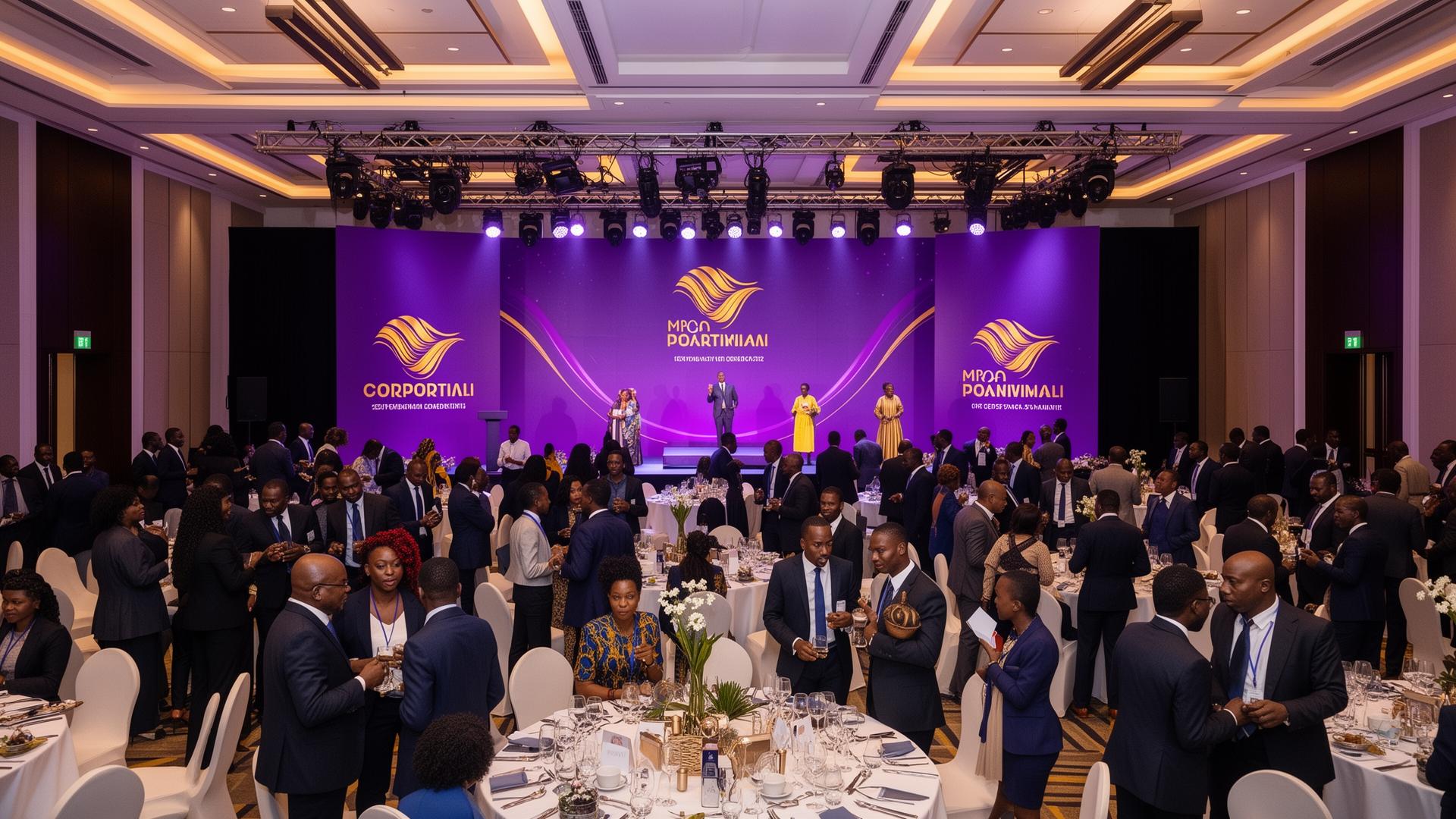
There is a small group of Ghanaian brands whose events feel different. Their product launches fill up. Their annual conferences attract the right audience. Their AGMs feel professional rather than perfunctory. When you look closely at what they are doing, the differences are not about budget. The differences are about decisions.
I have watched this small group, talked to their marketing leads, and watched the rest of the market catch on more slowly than I would have expected. The patterns are not secret. They are just rare. Here is what Ghana's smartest brands are doing differently across the three most common corporate event types.
Product launchesA Ghanaian product launch in 2026 is one of the most overcrowded categories in corporate events. Every fintech, every consumer brand, every food and beverage company has a launch. The space is noisy. Most launches blur into one another within a week.
Ghana's smartest brands stand out by doing four things.
They build a narrative for the launch before they build the launch itself
What is the story this product tells? Not the product specifications. The story. The smartest brands answer this question before they decide on the venue or the speakers. Everything that follows is shaped by the answer. The invitation reflects the story. The keynote reflects the story. The room reflects the story. The press materials reflect the story. By the time guests arrive, they have already been primed by an invitation that opened the story for them, and the room itself completes it.
They use the invitation as the first marketing asset
The invitation is not administrative. It is the first piece of marketing content the brand publishes for this launch. It is designed with the same care as the product packaging. It is shared on social media. It is reused as a press image. The invitation does double work — it confirms attendance, and it builds awareness with people who were not invited but who will be talking about the launch later.
They invest in the right people in the room
Most product launches are too crowded with the wrong attendees. The smartest brands cap their attendance below the maximum capacity, and they prioritise three categories: existing high-value customers, journalists who actually write about their category, and decision-makers from companies they want to do business with. A launch of 80 of the right people is more valuable than a launch of 250 of the wrong people. The smartest brands know this and select accordingly.
They follow up within 48 hours
The day after the launch, every attendee receives a thank-you with the launch deck attached, a short video summary, and a clear next step. This is what separates a launch that disappears into the social feed from a launch that generates business. The follow-up is built before the launch is hosted, not after.
ConferencesGhanaian corporate conferences have a structural problem. They are too long, too unfocused, and too much like the conferences of 2015. The smartest brands have started solving this.
They cut the agenda
The default Ghanaian conference is full-day, with eight to twelve sessions. The smartest brands run focused half-day events with four to six sessions. The agenda is tighter. The speakers are sharper. The audience stays engaged. The conference produces more value in three hours than the conventional all-day format does in eight.
They select the audience
Open conferences with no qualification attract people who came for the lunch. The smartest brands invite specifically, vet the registrations, and turn down people who would dilute the room. This is uncomfortable. It is also what produces conferences worth attending.
They build conversations into the format
A conference of consecutive talks is not actually a conference. It is a series of one-way broadcasts. The smartest brands intersperse the talks with structured small-group discussions, breakouts that produce real conversations, and panel formats that reward disagreement. The room leaves with conversations they started at the event and continued afterwards.
They use the conference invitation to set expectations
The invitation tells attendees what kind of conference this is. A conference invitation that says "we are doing this differently" is the start of a different conference. The attendees arrive ready for a different experience.
AGMsAnnual general meetings are the most underrated corporate event format in Ghana. Most companies treat them as compliance exercises. The smartest brands treat them as strategic communication opportunities.
They make the AGM matter
The CEO does not just deliver the annual report. They tell the story of the year. What was hard. What was won. What is being committed to in the coming year. The AGM becomes a moment of accountability that the shareholders and board actually want to attend.
They invite the right shareholders properly
Senior shareholders receive personal invitations from the chairman. Institutional shareholders receive formal invitations with the appropriate level of formality. Retail shareholders receive accessible invitations that make it easy to attend or to follow online. Treating all shareholders the same is the lazy default. Treating them appropriately to their relationship with the company is what produces an AGM that strengthens the company.
They livestream for the diaspora and remote shareholders
This is becoming standard for the smartest brands. A reliable livestream for shareholders who cannot attend physically, with proper video and audio quality, and a way for remote shareholders to submit questions. This is no longer optional for Ghanaian companies with international investors.
They follow up with the substance
Within a week of the AGM, the full presentation, the Q&A summary, the financial highlights, and any commitments made are circulated to all shareholders. The AGM does not end when the meeting closes. It ends when the follow-up has been distributed and absorbed.
What connects all threeAcross product launches, conferences, and AGMs, the brands doing this best have something in common. They treat the event as part of a longer conversation with their stakeholders, not as a standalone moment.
The invitation begins the conversation. The event sustains the conversation. The follow-up extends the conversation. Each event is connected to the next, and the relationships build over time.
The brands that treat each event as a standalone moment have a different problem. They start every conversation from zero. The audience that came to last year's launch does not come to this year's. The shareholders who attended this AGM do not have a continuing relationship with the company.
This is the deeper difference between Ghana's smartest brands and the rest. The smartest brands are building relationships. The rest are hosting events.
What I would say to every marketing leaderPick one of your annual events. Look at it carefully. Ask whether it is part of a continuing conversation with your stakeholders, or whether it is a standalone moment.
If it is standalone, the work to do is to connect it to what came before and what will come after. The invitation can reference last year's event. The follow-up can preview next year's. The audience starts to see the events as a series rather than as isolated occurrences.
This shift is what produces the brands whose events feel different. Not the budget. Not the venue. The continuing conversation that the events are part of.
Build the conversation. The events will look after themselves.
VibeLink builds polished digital invitations for corporate events in Ghana.
If your brand deserves a proper invitation, we are here.
Found this useful? Share it